
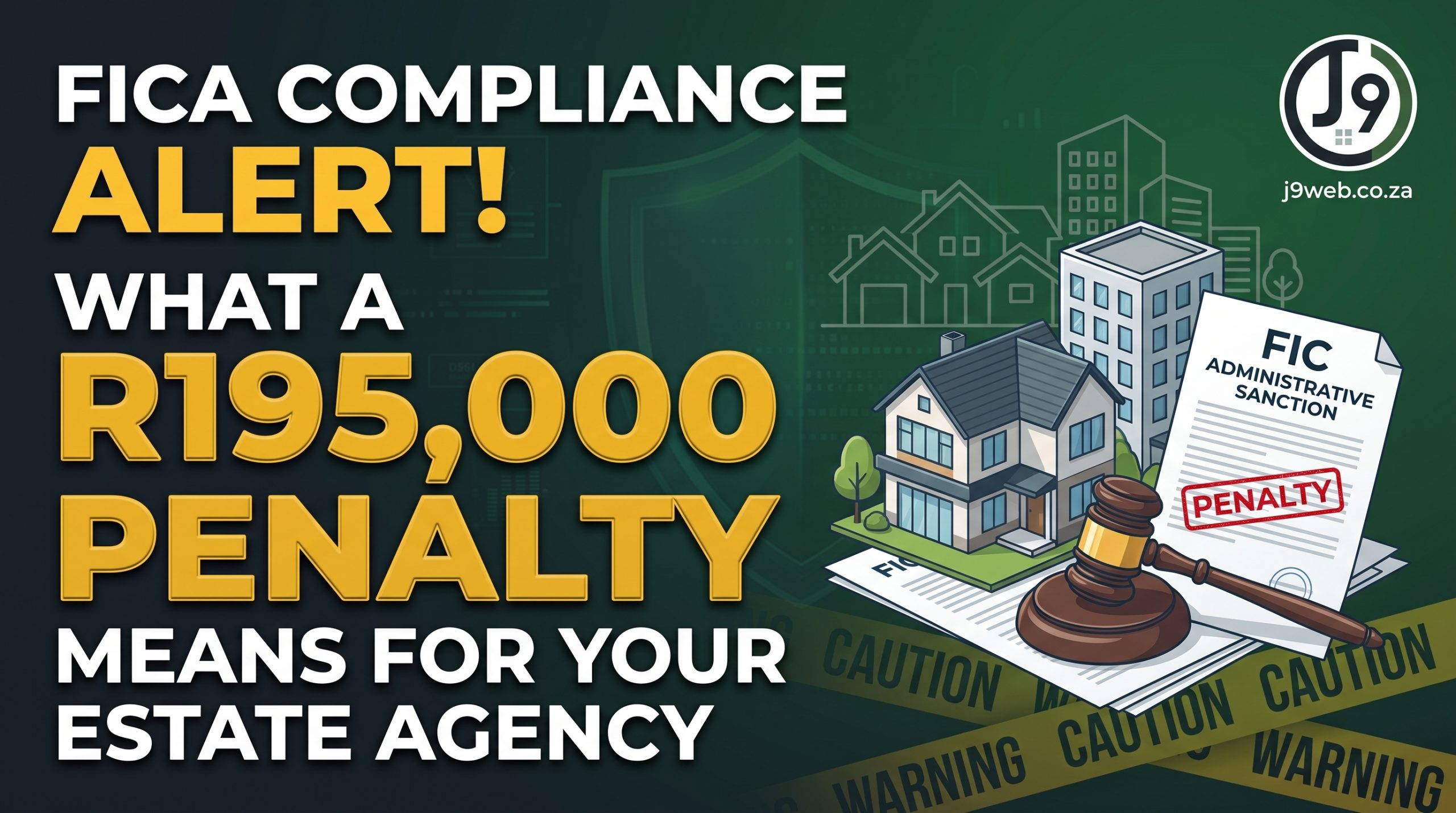
FICA Compliance Alert: What a R195,000 Penalty Means for Your Estate Agency
On 6 February 2026, the Financial Intelligence Centre (FIC) issued a formal administrative sanction against a South African estate agency, Tracy Harris Properties CC. The resulting penalty? A hefty R195,000 fine, a public caution, and a strict deadline to pay the National Treasury.
While the fine itself is eye-opening, the true warning lies in the specific violations – they are the exact same compliance gaps found in almost every non-compliant property business in South Africa today.
As an estate agent operating in South Africa, you are legally classified as a Schedule 1 accountable institution under the FIC Act. Because the property sector routinely handles high transaction values, complex ownership structures, and cross-border fund movements, it is a well-known target for money laundering. The FIC expects estate agencies to act as gatekeepers, and this recent sanction proves they are actively penalising those who drop the ball.
Breaking Down the R195,000 Penalty
The FIC’s sanction against Tracy Harris Properties CC broke the penalty down into two very distinct findings:
R175,000 (Section 42): Failure to develop, document, maintain, or implement an adequate Risk Management and Compliance Programme (RMCP).
R20,000 (Section 43B(4)): Failure to comply with specific ongoing staff training obligations.
Alongside the financial blow, the agency was issued a formal public caution and directed to acquaint itself with the FIC Act, the goAML reporting system, and the regulator’s published guidelines. This wasn’t just standard paperwork; it was the FIC formally stating that the agency lacked a working knowledge of its own legal duties.
3 Crucial Lessons for Every Property Business
1. Your RMCP is your biggest compliance risk.
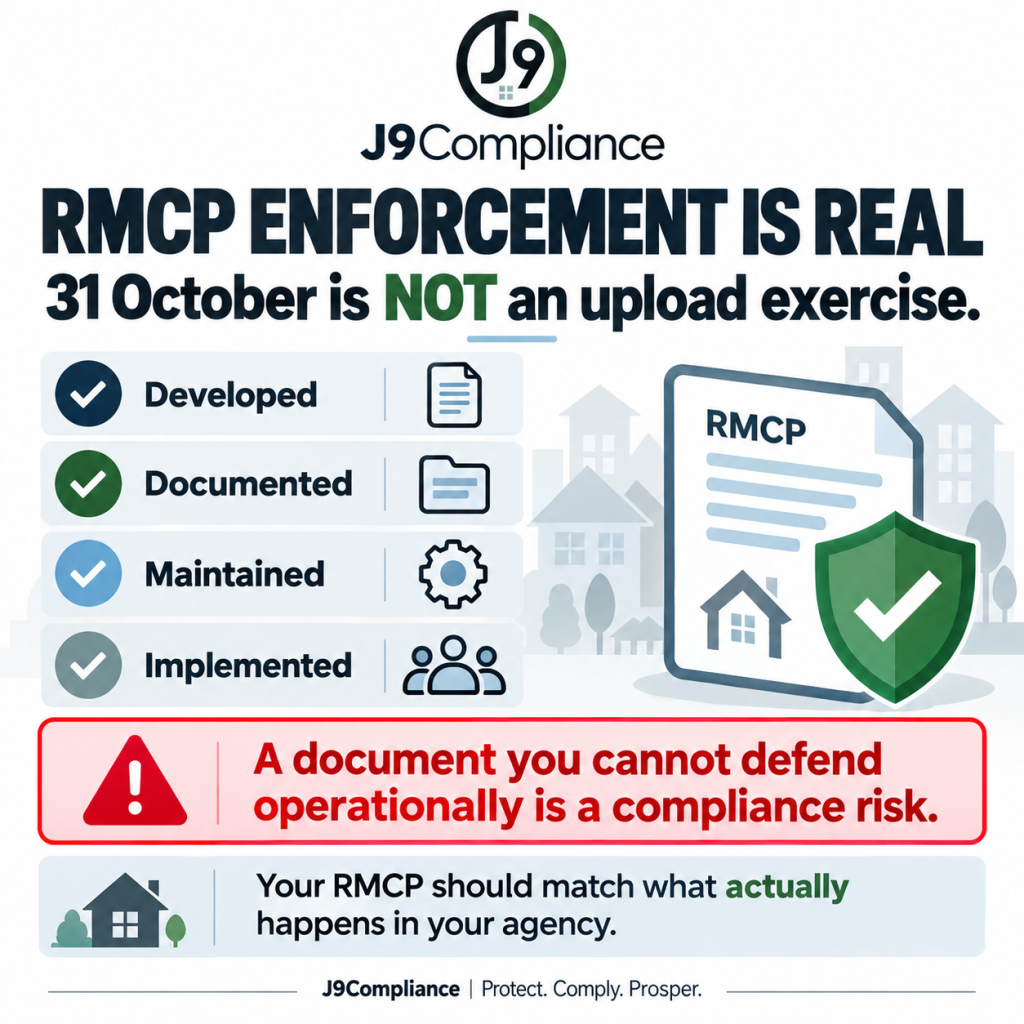
Accounting for nearly 90% of the total fine, the RMCP failure highlights the regulator’s primary focus. Section 42 of the FIC Act requires you to have a customised, documented programme that assesses and mitigates risks specific to your business. This outlines how you conduct due diligence on buyers and sellers, verify beneficial ownership of companies, and report suspicious transactions. A generic, downloaded template that gathers dust on a shelf will not protect you. The FIC will spot the gap and penalise you for it.
2. Training is a separate, mandatory requirement.
Many principals assume that simply having an RMCP covers their training obligations. The R20,000 penalty proves otherwise. Under Section 43B(4), providing ongoing, documented training to your staff is a standalone legal duty. If your agency’s only FICA “training” happened during registration years ago, you are entirely exposed to a similar fine.
3. Reputational damage costs more than the fine.
Administrative sanctions are published publicly. For an estate agency, where reputation and trust are your primary commercial assets, a public caution can be devastating. Clients, referral networks, and professional bodies all have access to this information. Maintaining compliance is vastly easier – and cheaper – than trying to rebuild your brand after a public regulatory sanction.
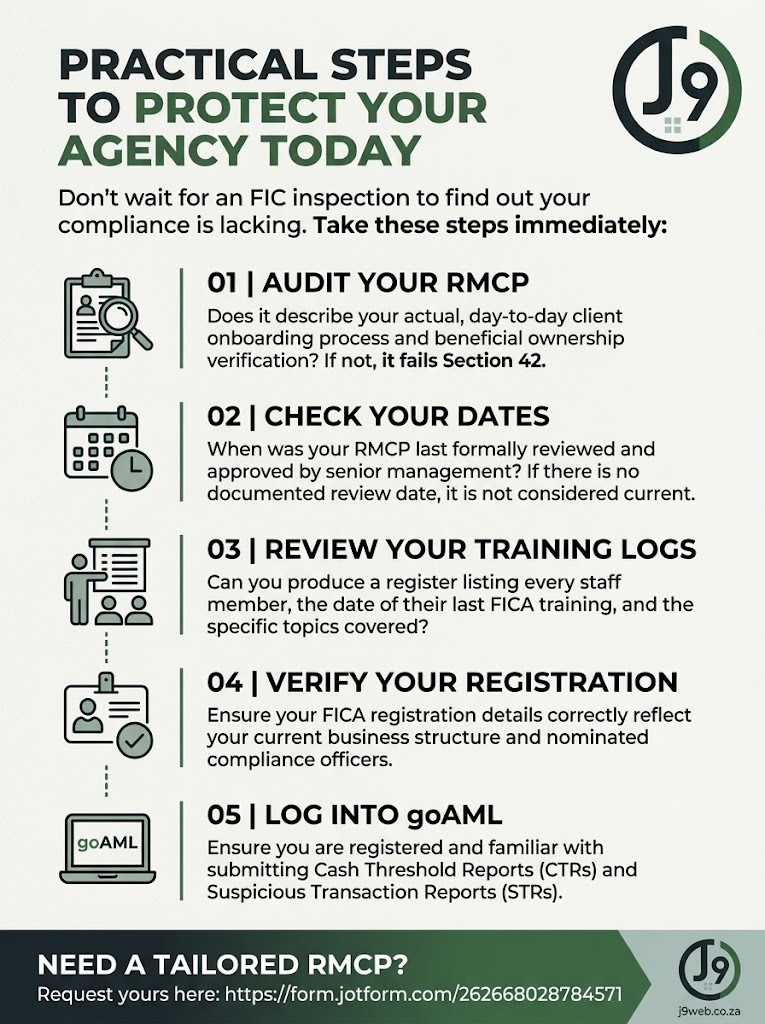
Practical Steps to Protect Your Agency Today
Don’t wait for an FIC inspection to find out your compliance is lacking. Take these steps immediately:
Audit your RMCP: Does it describe your actual, day-to-day client onboarding process and beneficial ownership verification? If not, it fails Section 42.
Check your dates: When was your RMCP last formally reviewed and approved by senior management? If there is no documented review date, it is not considered current.
Review your training logs: Can you produce a register listing every staff member, the date of their last FICA training, and the specific topics covered?
Verify your registration: Ensure your FICA registration details correctly reflect your current business structure and nominated compliance officers.
Log into goAML: Ensure you are registered and familiar with submitting cash threshold reports (CTRs) and suspicious transaction reports (STRs).
Get Your Compliance Sorted
The recent sanctions are not isolated incidents – they represent an enforcement programme that is rapidly expanding. Being FICA compliant requires an operational, fully documented programme that your staff understands and applies daily.
If your agency’s Risk Management and Compliance Programme isn’t up to standard, don’t wait for the FIC to find the gaps.